
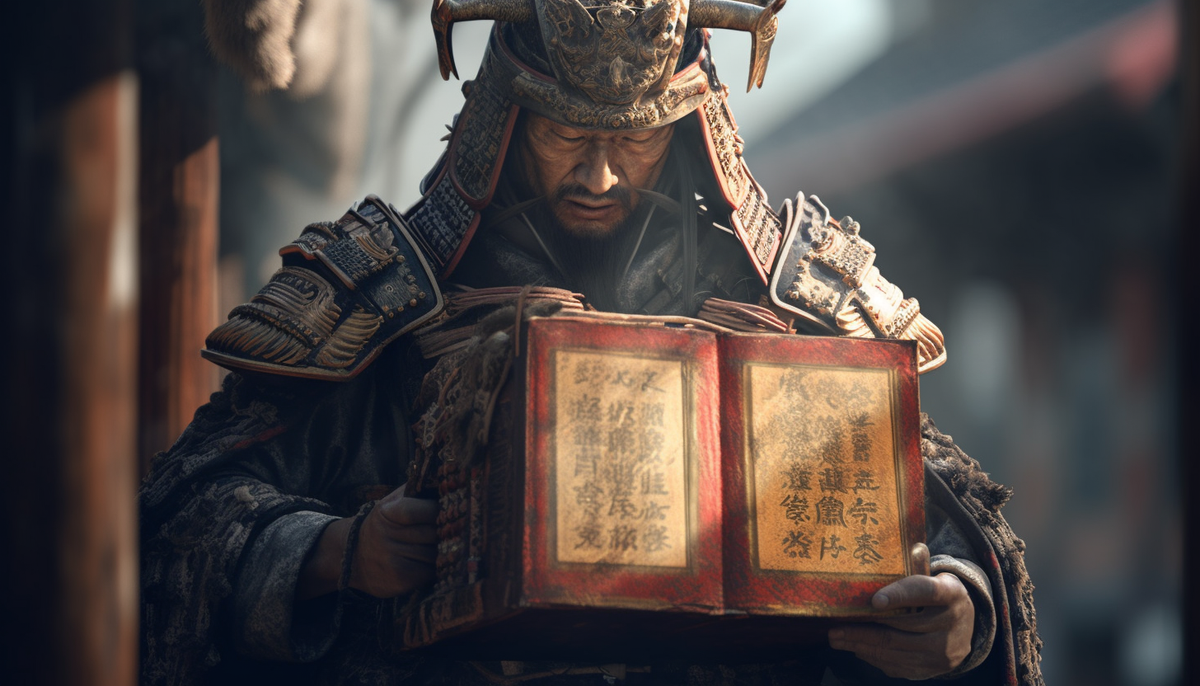
Bushido, or "the way of the samurai", is the moral and ethical code that guided the samurai, the noble swordsman class of feudal Japan. This code emphasises values such as loyalty, honour, obedience, duty, self-control and respect. At its heart is the katana, the samurai's sword, which is far more than a simple tool. In this article, we explore the role of the katana in Bushido.
The katana: an extension of the samurai
In Bushido, the katana is seen as an extension of the samurai himself. It is not only an instrument of swordsmanship but also a symbol of the samurai's honour and status. A samurai without his katana was considered incomplete, and losing his katana was a great disgrace.
The katana and self-control
Self-control is a key value of Bushido, and the katana plays an important part in it. Learning the art of the katana, or kenjutsu, demands great discipline and self-mastery. A samurai had to be able to handle his katana with precision and control, even in the most stressful situations.
The katana and ritual
The katana also has a role in various rituals associated with Bushido. For example, in the ceremony of seppuku (or harakiri), a ritual practised by samurai to die with honour rather than be captured or live in shame, the katana was often used.
The katana as a work of art
A katana is not only a tool but also a work of art. Each katana is carefully forged by hand by a skilled craftsman, in a process that can take months. The beauty and quality of a katana are highly prized, and a fine katana is regarded as a treasure.
The katana and spirituality
In Bushido, the katana is often associated with spirituality. It is seen as a link between the physical world and the spiritual world. The samurai believed that their katana held their spirit, and they treated their sword with great respect. Before critical moments, they might pray and meditate with their katana, seeking strength and guidance.
The katana and respect for life
Despite its role as a sword, the katana is also linked to the value of respect for life in Bushido. Samurai were trained to use their katana responsibly and not to draw their sword without need. The act of drawing the katana meant the samurai was prepared to take the most serious step, and it was never done lightly.
The katana and loyalty
Loyalty is another key value of Bushido, and the katana plays a symbolic role in it. A samurai was expected to be ready to draw his katana and give his life for his lord. The katana, as a symbol of the samurai's honour and duty, was a constant reminder of that loyalty.
The katana in modern Bushido
Even in the modern era, the katana and the values of Bushido continue to influence Japanese culture. The katana is still respected as a work of art and a symbol of samurai tradition. In addition, many martial arts schools in Japan still teach the art of the katana, passing the values of Bushido on to new generations.
Conclusion
The role of the katana in Bushido goes well beyond its use as a sword. It is a symbol of honour, discipline, loyalty and respect for life. By understanding the role of the katana in Bushido, we can better appreciate the depth and complexity of samurai culture.
Share:
Famous Katanas and Their Stories
The Materials Used to Make Katanas